Science and technology
Historian Joseph Needham proposed to divide pre-modern Chinese sciences into the ‘orthodox’ and ‘unorthodox’, with astronomy, agriculture, and medicine belonging to the former, and alchemy and chemistry the latter.
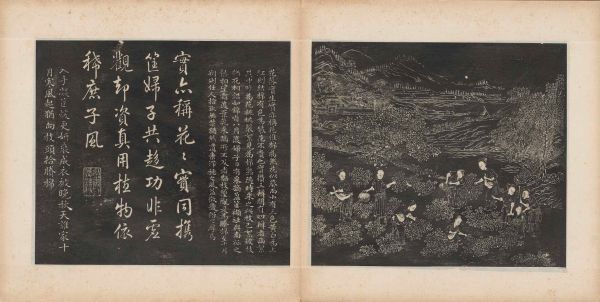
As a principal contributor to the nation’s wealth, agriculture was of cardinal importance to the state. As such, the ‘spirits of land and grain’ identified in the Confucian Book of Rites were symbols of the nation’s survival, and emperors regularly sacrificed at their altars. The depictions of agrarian life in The Imperially Inscribed Illustrations of Cotton are accompanied by poems contributed by Emperor Qianlong (1711-1799), emphasising their importance.
Astronomy, on which the agricultural calendar was based, was equally important to political stability: Chinese emperors were regarded as the Son of the Heaven, and therefore the successful operation of the state correlated with that of the universe.
It is curious that while China is known for many significant technological achievements, from inventions like paper and printing to industrial innovations in ceramic production and architecture, it did not benefit from a scientific revolution as Europe did. While scientific invention was common, pre-modern China’s rigid class system meant there was not much financial incentive or structural support for knowledge to be sold, shared, or transformed into practice.
-
Li Jie
Henan, China, 1035-1110
State Building Standards, 1925
Woodblock imprint
Wujin: Chuanjing Publishing House
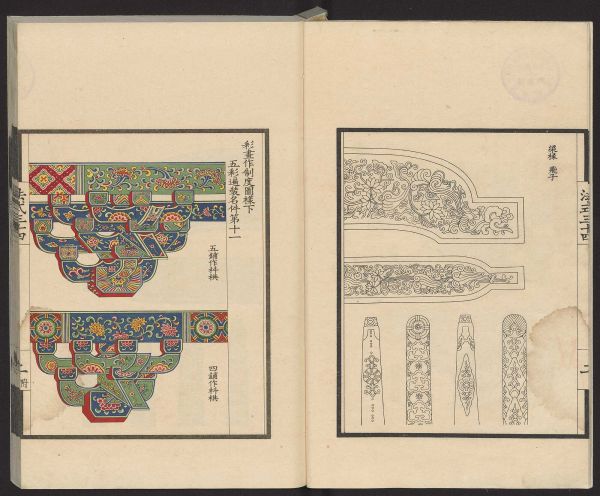
State Building Standards was written by the assistant director of the office of public works and construction, Li Jie, who worked in the Imperial court of the Northern Song dynasty for thirteen years. His reference work on architecture, including standards, information and diagrams on how to build structures, the materials needed, and how many people it would take to construct them was influential at the time: the Song dynasty was not only a period of artistic growth, it also saw the rise of the civil service, and allowed anyone with talent to participate in the civil service exams. Li’s book, originally written in 1103, was re-discovered by academic Zhu Qiqian in 1919 and is one of the earliest and most complete texts from the time.
Donated by the Friends of the Baillieu Library
Rare Books Collection, Archives and Special Collections
UniM Bail SpC/RB 37B/2 37B/9
-
Lan Pu
Jiangxi, China, d.1796
The Potteries of China, 1891
Woodblock imprint
China: unknown publisher
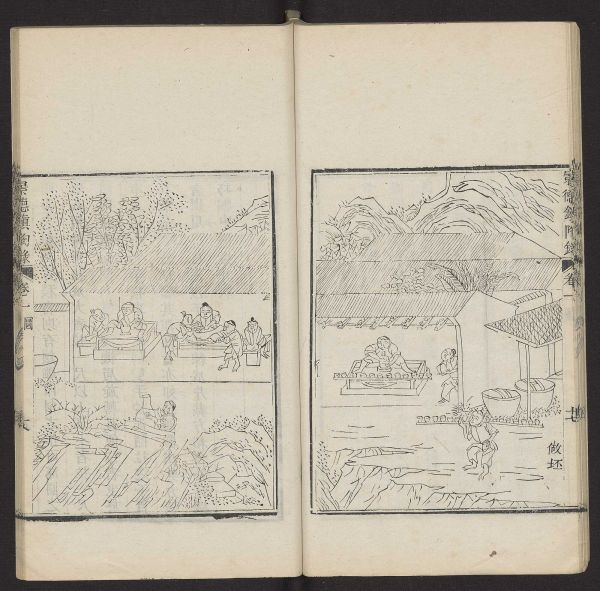
Known as the country’s ‘Porcelain Capital’, Jingdezhen had a long-held reputation for producing the finest porcelain in imperial China. This book was compiled by Lan Pu, a local scholar. It records the history of the city, information about the porcelain manufacturing process (including the purchase of the ingredients and the sale of the final products), as well as an introduction to renowned kilns elsewhere throughout Chinese history.
Rare East Asian Collection, Archives and Special Collections
UniM Bail SpC/EA 8560 L432
-
Fang Guancheng (compiler)
Anhui, China, 1698-1768
The Imperially Inscribed Illustrations of Cotton, c.1770-1795
Stone rubbing
These stone rubbings, presented in unusual concertina format, display illustrations with corresponding descriptions about the production of cotton in China. Fang Guancheng, the governor-general of the Zhili metropolitan region, made the images and some of the text, but further poetic additions were contributed by Emperor Qianlong. Each intricately carved image and accompanying words conveys an idealised depiction of pastoral life, focusing on each step in the cotton-making process from sowing seeds to dyeing the finished textile.
Rare East Asian Collection, Archives and Special Collections
UniM Bail SpC/EA gf 8136 Y264