Excavations
-
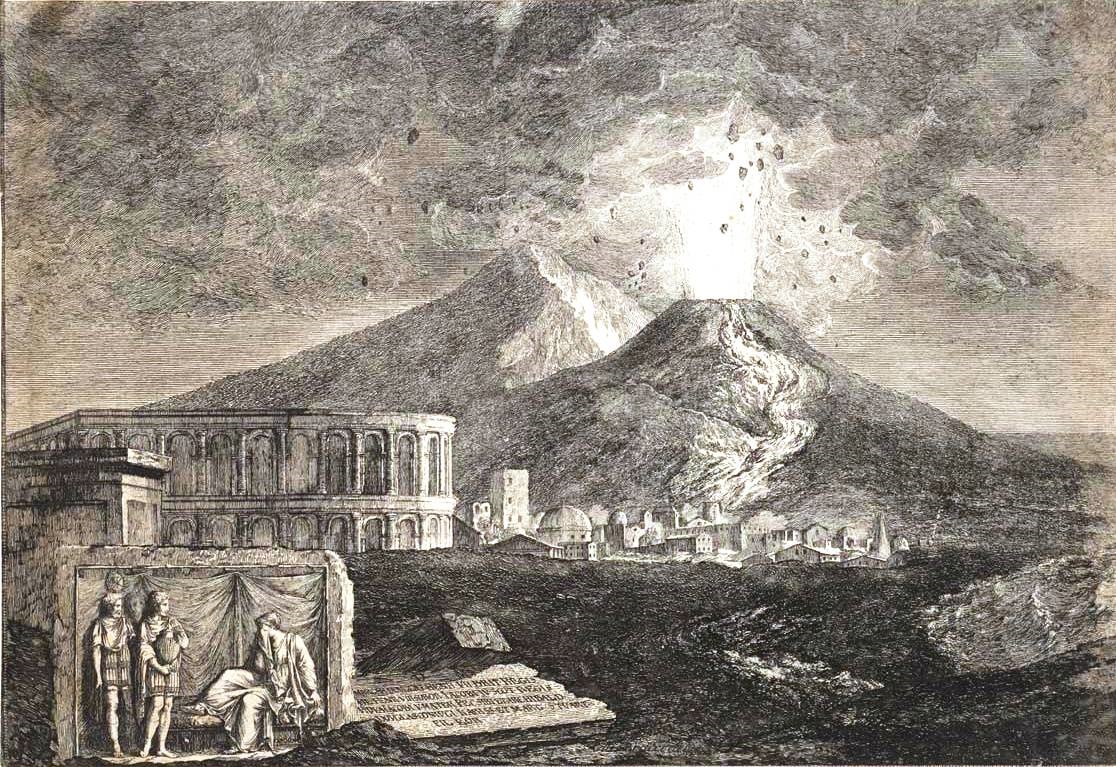
Antoine Alexandre Joseph Cardon (etcher and engraver)
Belgium (Flanders), 1739-1822
after Giuseppe Bracci (artist)
Unknown, active Italy (Naples),1760-68Map of the Bay of Naples (fragment), 1772
Etching and engravingGift of Dr J. Orde Poynton, 1959
Prints and Drawings Collection, Archives and Special Collections
1959.2959 -
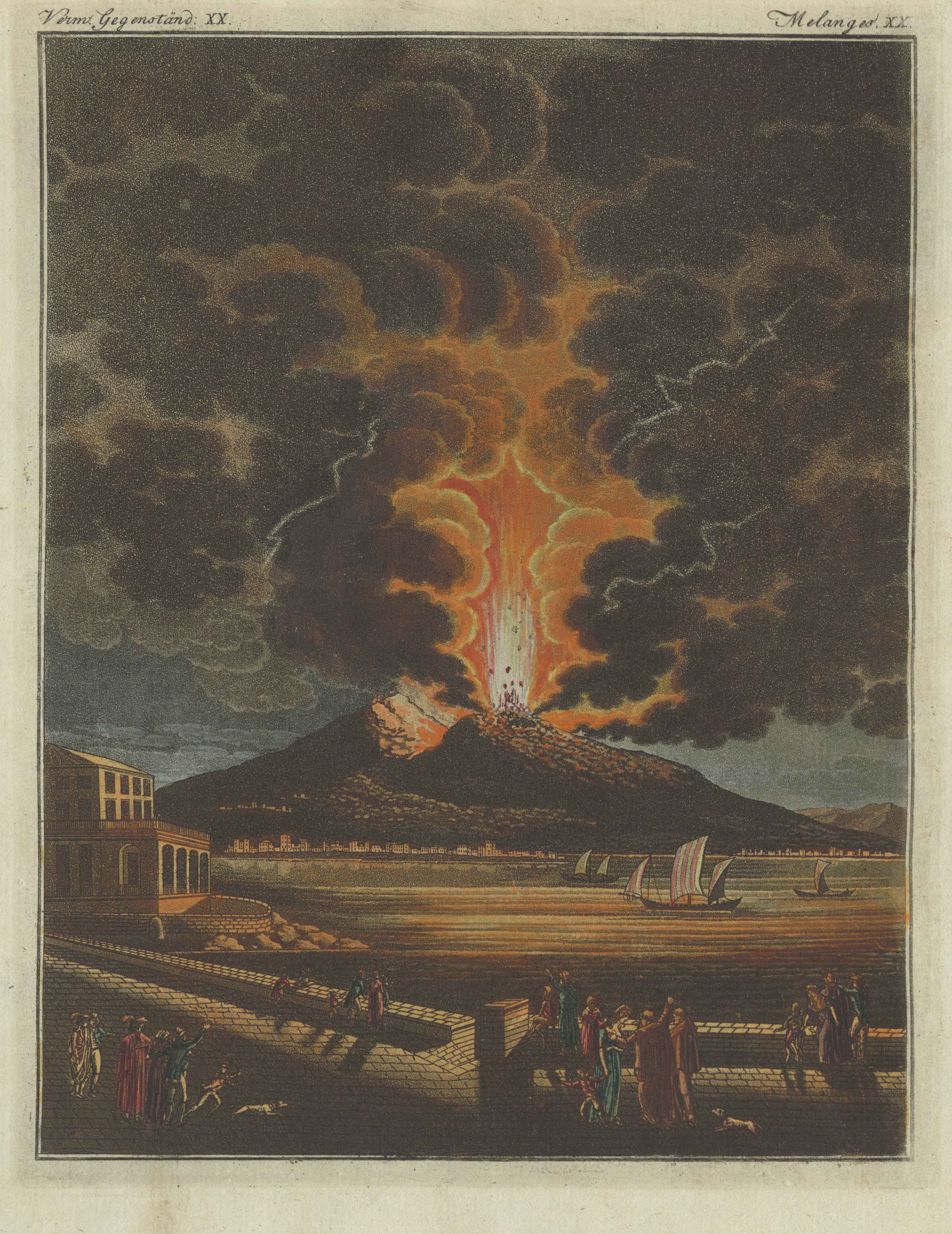
Unknown (artist)
Friedrich Justin Bertuch (publisher)
Germany (Weimar), 1747-1822Vesuvius, 1793-94
Hand-coloured engraving
from Bild Bilderbuch für Kinder: enthaltend eine angenehme Sammlung von Thieren, Pflanzen, Blumen, Früchten, Mineralien, Trachten und allerhand andern unterrichtenden Gegenständen aus dem Reiche der Natur, der Künste und Wissenschaften [Picture book for children containing a pleasant collection of animals, plants, flowers, fruits, minerals, costumes and all kinds of other educational objects from the realm of nature, arts and sciences]Gift of Terence Lane OAM, 2024
Prints and Drawings Collection, Archives and Special Collections
2024.0112 -
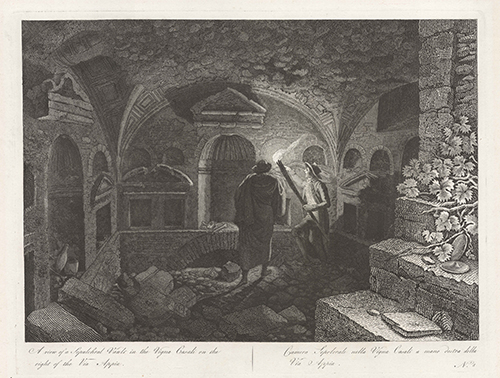
Carlo Labruzzi (artist and publisher)
Italy (Rome),1748 1817; active Perugia
William Palmer (publisher)
Unknown, active England, 1782-1800A view of a sepulchral vault in the Vigna Casali on the right of the Via Appia./ Camera sepolcrale nella Vigna Casali a mano destra della Via Appia., c.1790-94/95
Etching
from Via Appia illustrata ab urbe Roma ad Capuam [The illustrated Appian Way from the city of Rome to Capua]Gift of Terence Lane OAM, 2024
Prints and Drawings Collection, Archives and Special Collections
2024.0136 -
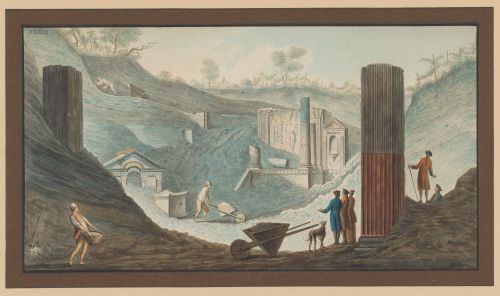
Unknown (engraver)
after Pietro Fabris (artist)
Unknown, active England and Italy (Naples), c.1756 84
William Hamilton (author and publisher)
England, 1730-1803; active Italy (Naples)The excavation of the Temple of Isis in Pompeii, 1775
Hand-coloured engraving
from Campi Phlegraei: Observations on the volcanos of the two Sicilies, as they have been communicated to the Royal Society of LondonGift of Terence Lane OAM, 2024
Prints and Drawings Collection, Archives and Special Collections
2024.0113This engraving has been hand-coloured with gouache and would have originally been bound in a volume of Campi Phlegraei [Phlegraeian fields] when it was published by Sir William Hamilton in 1775. The illustrations were created by artist Pietro Fabris to accompany Hamilton’s text, which reproduced the letters he had sent to the Royal Society in London documenting his observations and commentary on Mount Vesuvius and the large volcanic caldera surrounding Naples, including the excavation of Pompeii.
Fabris’ picturesque illustrations were so gorgeous in their vivid colour that they overshadowed Hamiton’s observations. However, in this and other publications Hamilton collaborated on, historian Hoah Heringhman credits the amateur volcanologist and collector with an early recognition that in the exchange between natural history and antiquarianism, and contemporary Neapolitan customs and manners, a continuity from the present to what he described as ‘a most remote antiquity’, or prehistory, was evident.