The Society of Dilettanti
-
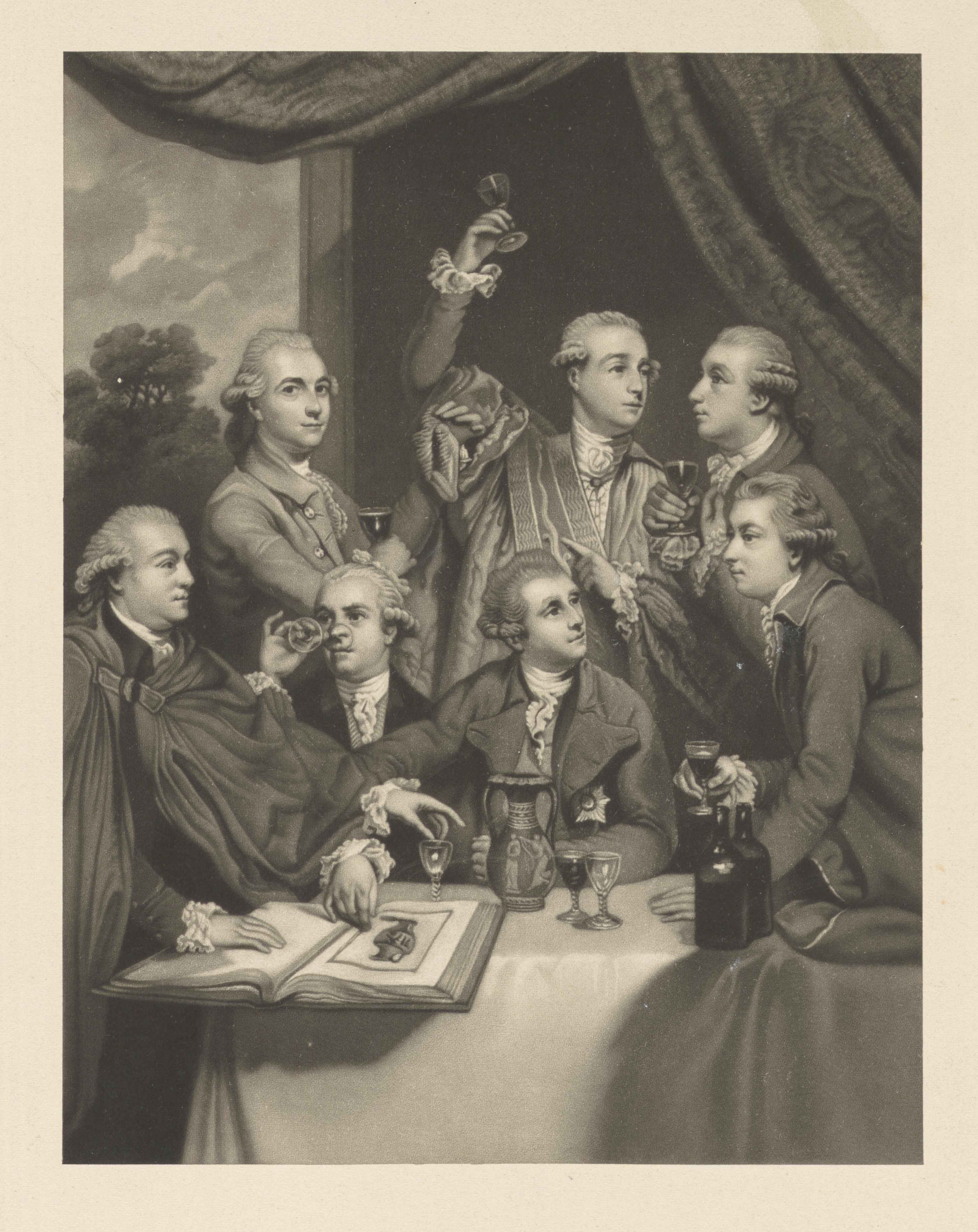
Unknown (engraver)
after William Say (mezzotinter)
England,1768 1834
after Joshua Reynolds (artist)
England, 1723 1792(Members of the Society of Dilettanti), c.1850
PhotogravureGift of Terence Lane OAM, 2024
Prints and Drawings Collection, Archives and Special Collections
2024.0117In 1777, Sir Joshua Reynolds was commissioned to paint two portraits of the members of the Society of the Dilettante. The first featured antiquarians, and had Sir William Hamilton (1730-1803) at its centre. Pictured seated, Hamilton is pointing to an open page of the first volume of his vase collection, AEGR (1767), with Society President Sir Watkin William Wynn (1749-89) standing behind him dressed in a Roman toga. The second featured collectors of rocks and gemstones and included Hamilton’s nephew Charles Greville (1749-1809), who is shown toasting drinking glasses with the Society Secretary John Charles Crowle (1738-1811) and botanist Joseph Banks (1743-1820), six years after Banks returned from accompanying Captain James Cook (1728-29) on his first voyage to the South Pacific.
-
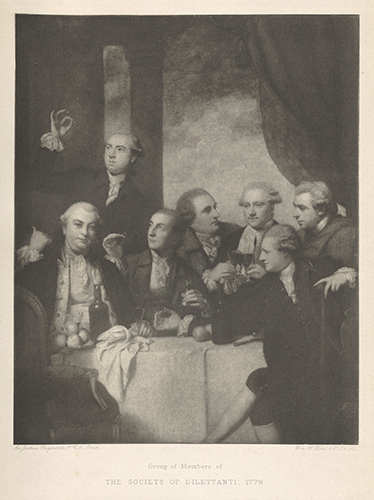
Lionel Cust (author)
England, 1859-1929History of the Society of Dilettanti: compiled by Lionel Cust and edited by Sidney Colvin., 1898
London: MacMillanRare Books Collection, Archives and Special Collections
UniM Bail SpC/BX 706 S678.oIn the year 1734 some gentlemen who had travelled in Italy, desirous of encouraging at home a taste for those objects which had contributed so much to their entertainment abroad, formed themselves into a society under the name of the Dilettanti, and agreed upon such resolutions as they thought necessary to keep up the spirit of the scheme.
Richard Chandler, Ionian Antiquities, 1769The first meeting of the social club that become known as the Society of the Dilettante probably took place in late 1732, four years before official minute books were taken to record the group’s activities, which revolved around a reverence for classical antiquities, scientific discovery, membership of the Royal Society, and a shared experience of taking the Grand Tour.
-
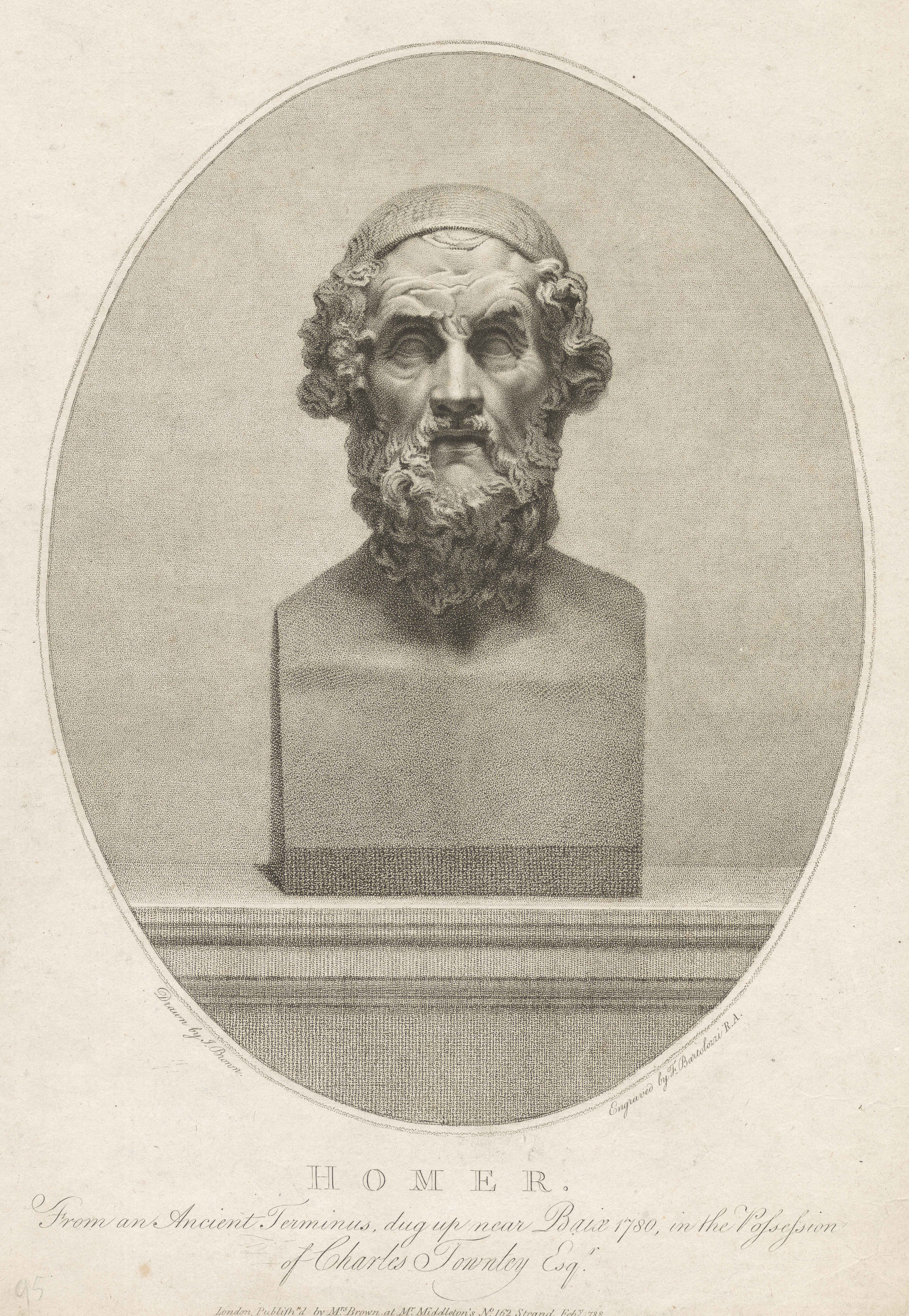
Francesco Bartolozzi (etcher and engraver)
Italy (Florence), 1728-1815; active Italy (Venice, Rome) and England
after John Brown (draughtsman)
England, 1752-1787
Mrs Brown (publisher)
Unknown, active England, c.1788Homer. From an ancient terminus, dug up near Baiae 1780, in the possession of Charles Townley Esqr., 1788
Etching and stipple engravingGift of Terence Lane OAM, 2024
Prints and Drawings Collection, Archives and Special Collections
2024.0119 -
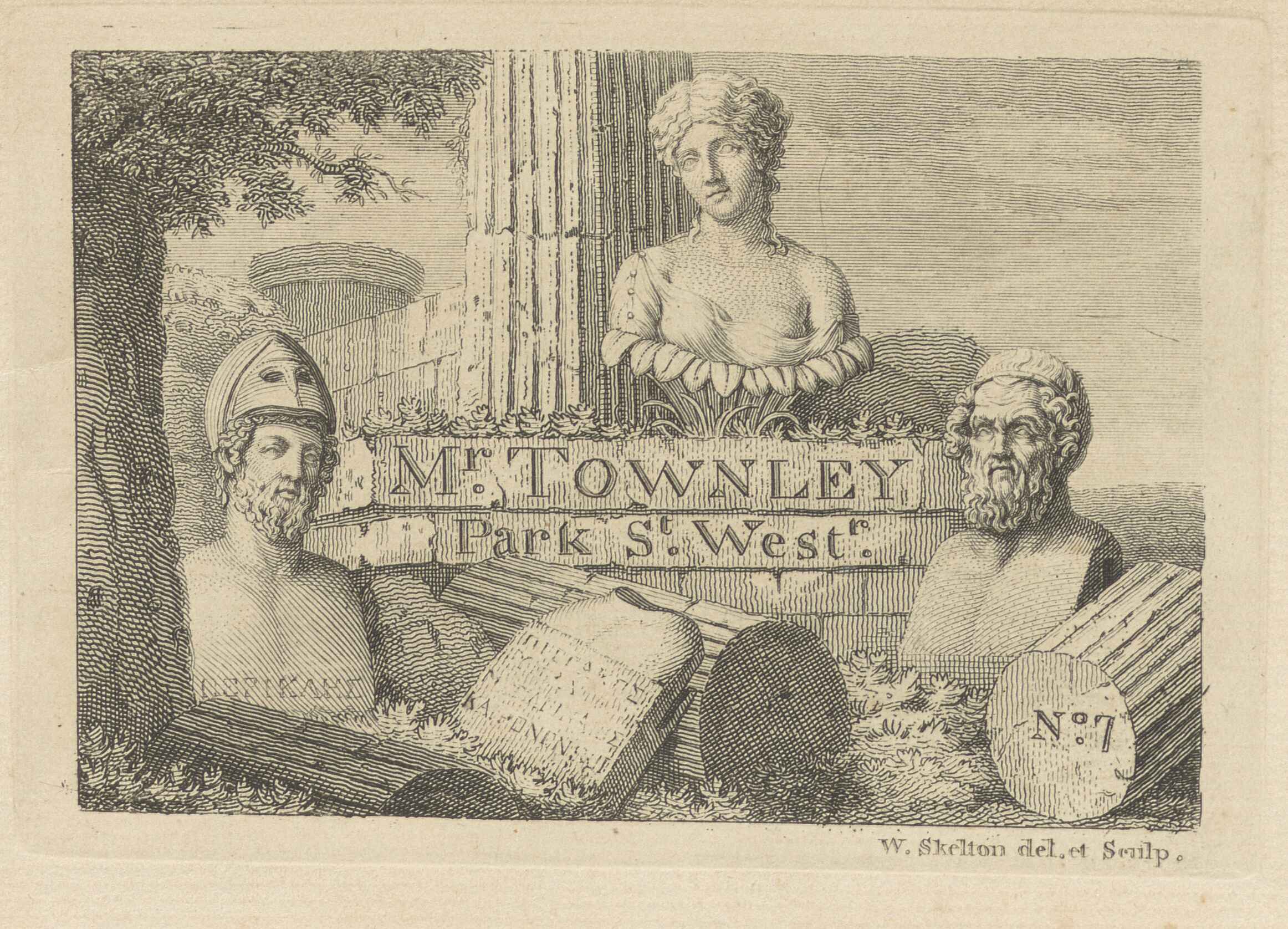
William Skelton (artist)
England, 1763 1848(Visiting card of Charles Townley), c.1784-1805
EtchingGift of Terence Lane OAM,2024
Prints and Drawings Collection, Archives and Special Collections
2024.0118This visiting card was made for Charles Townley (1737-1805), a member of the Society of Dilettanti from 1786, a Fellow of the Royal Society and trustee of the British Museum from 1791, and a collector of antiquities who took three Grand Tours to Italy. The vast collection of classical Greek and Roman marble, bronzes and terracotta sculptures Townley amassed were purchased by the British Museum after his death in 1805. In 1814 his collection of hundreds of smaller antiquities, including coins, engraved gems, and pottery, followed.
The card features three of Townley’s prized objects. A marble bust of Clytie (top), excavated near Naples and purchased there in 1772; this was, according to the British Museum, the only marble Townley took with him when forced to flee his house during the Gordon Riots of 1780. A bust of Homer (right), excavated near Baiae on the Gulf of Naples, and Pericles (left) excavated from Tivoli near Rome, were both purchased for Townley in Naples by Sir William Hamilton (1730-1803) before being shipped to London.