Ruin-mania
-
Giacomo Lauro (artist and publisher)
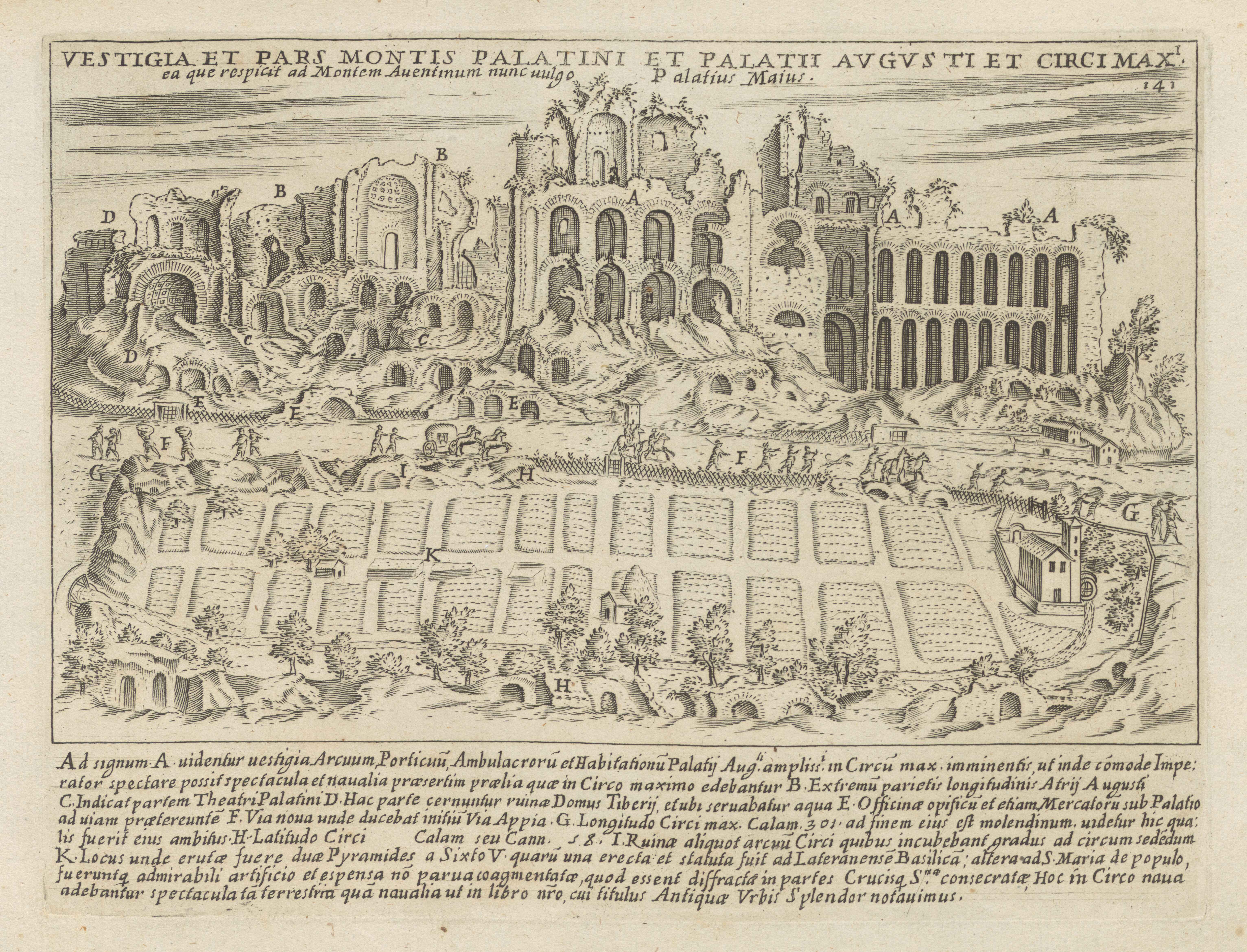
Italy (Rome), 1561 after 1635Vestigia et pars Montis Palatini et Palatii Augusti et Circi Maxi. [Remains and part of the Palatine Hill, the Palace of Augustus, and the Circus Maximus.],1641
Engraving
from Antiquae Urbis Splendor [The Splendor of the Ancient City]Gift of Terence Lane OAM, 2024
Prints and Drawings Collection, Archives and Special Collections
2024.0044 -
Giacomo Lauro (artist and publisher)
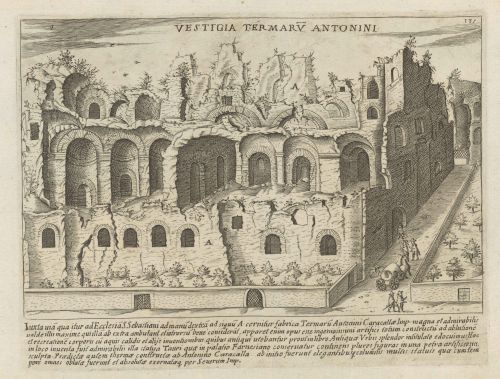
Italy (Rome), 1561 after 1635Vestigia Termarv Antonini. [Remains of the Baths of Caracalla.], 1641
Engraving
from Antiquae Urbis Splendor [The Splendor of the Ancient City]Gift of Terence Lane OAM, 2024
Prints and Drawings Collection, Archives and Special Collections
2024.0045 -
Giacomo Lauro (artist and publisher)
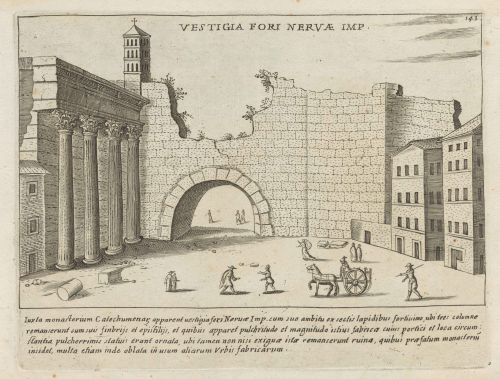
Italy (Rome), 1561 after 1635Vestigia Fori Nerva Imp. [Remains of the Forum of Nerva.], 1641
Engraving
from Antiquae Urbis Splendor [The Splendor of the Ancient City]Gift of Terence Lane OAM, 2024
Prints and Drawings Collection, Archives and Special Collections
2024.0046 -
Giovanni Battista Piranesi (artist)
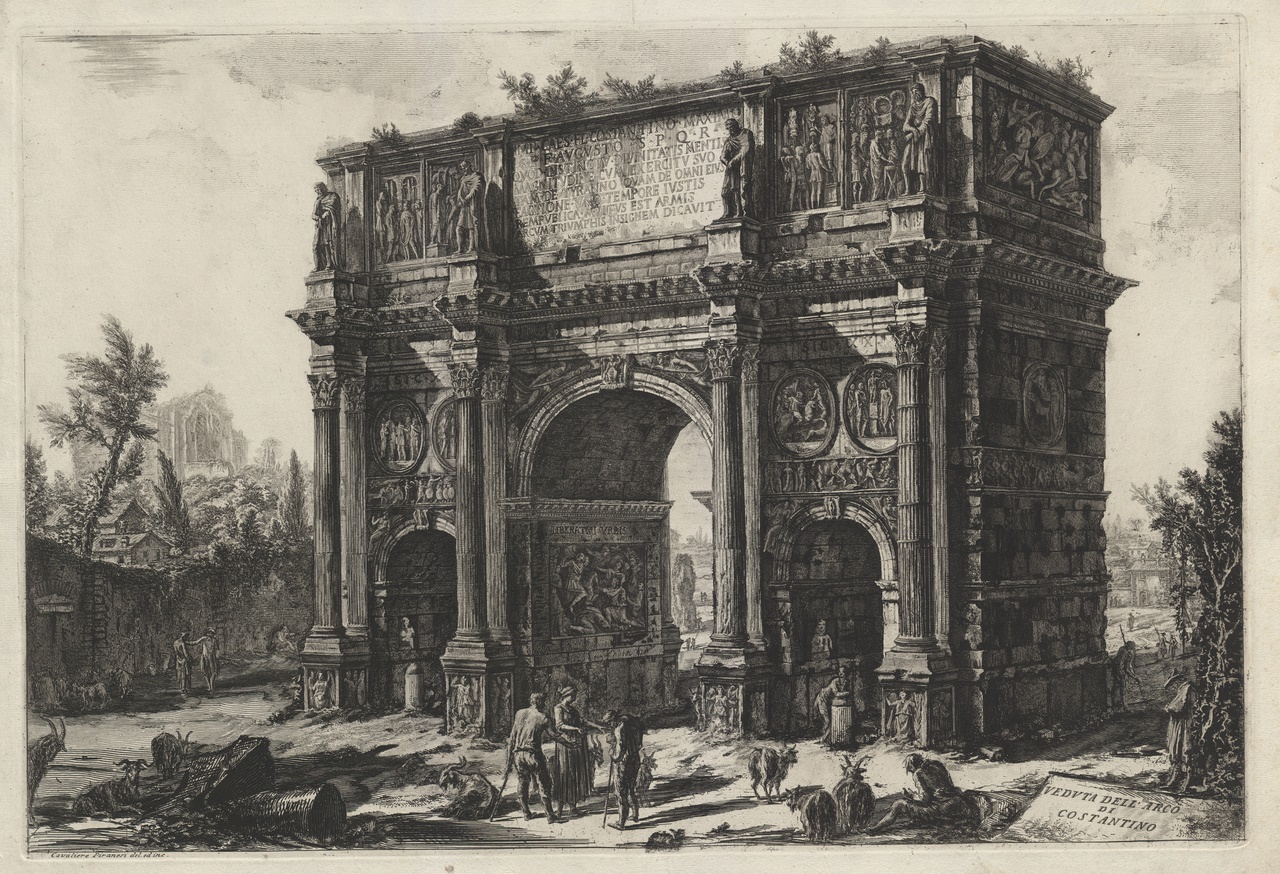
Italy (Venice), 1720 78; active RomeVeduta dell'Arco di Costantino [View of the Arch of Constantine],1756-61
Etching
from Vedute di Roma [Views of Rome]Purchased, 1994
Prints and Drawings Collection, Archives and Special Collections
1994.2101Piranesi trained as an architect before learning etching and engraving. His prints of Rome’s architectural landmarks were hugely popular with Grand Tourists, who could purchase the works directly from the artist’s studio during their stay in the city. Large-scale prints from the Views of Rome, one of the most famous and popular of the artist’s numerous series, were made throughout his life and issued individually or in groups bound into volumes from the late 1740s, in large numbers.
Piranesi imbued his images with a massiveness that emphasised the material and cultural monumentality ancient Rome exerted on the modern imagination. The impression his work left was so great that, as historian Jeremy Black notes, Piranesi’s etchings of Rome ‘led to tourists being disappointed when they saw reality, some of which they found squalid.’
-
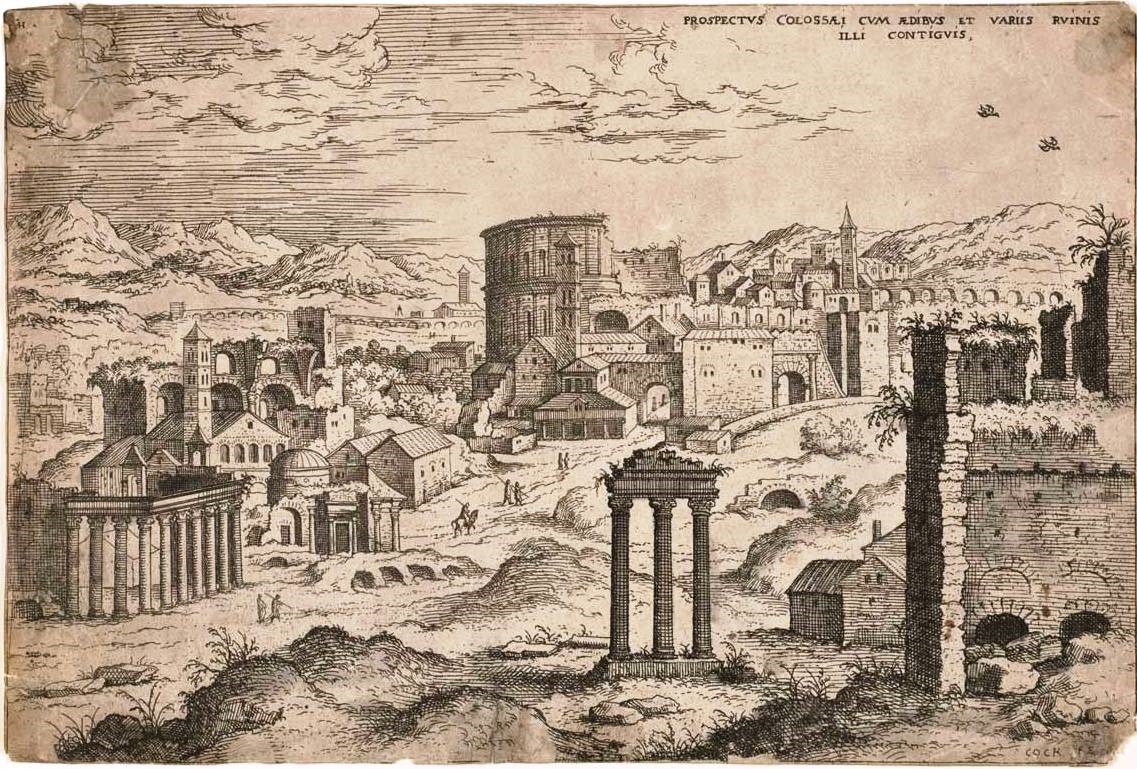
Hieronymus Cock (artist and publisher)
Belgium (Flanders), 1510-70
Volcxken Diericx (publisher)
Belgium (Flanders), c.1525-1600Prospectus Colossaei cum eadibus et rariis ruinis illi contiguis. [View of the Colosseum with buildings and various ruins near it.], 1550-51
Etching
from Praecipua aliquot Romanae antiquitatis ruinarum monimenta, vivis prospectibus, ad veri imitationem affabre designate. [Several important monuments of Roman antiquity, with vivid perspectives, skilfully designed to imitate the real thing.], also known as Large book of ruinsGift of Dr J. Orde Poynton, 1959
Prints and Drawings Collection, Archives and Special Collections
1959.2964Hieronymous Cock and his wife Volcxken Diericx published the Large book of ruins in Antwerp, 1551. It was the first major work to be produced at the couple’s publishing house Aux Quatre Vents [The Four Winds] and comprised 24 topographical views of Rome. Unique to all the subsequent books the couple published, the images were drawn and etched by Cock himself.
It is not known if Cock visited Rome, or if the ruins were based on earlier drawings made by other Netherlandish artists who had seen the real thing. Regardless, the landscapes in which the Roman ruins appear were almost certainly derived from Flemish paintings. Evoking an atmosphere of decay and dereliction, Cock’s images were designed to appeal to the growing interest in ‘ruin mania’ that existed in Europe from the mid-sixteenth century.
-
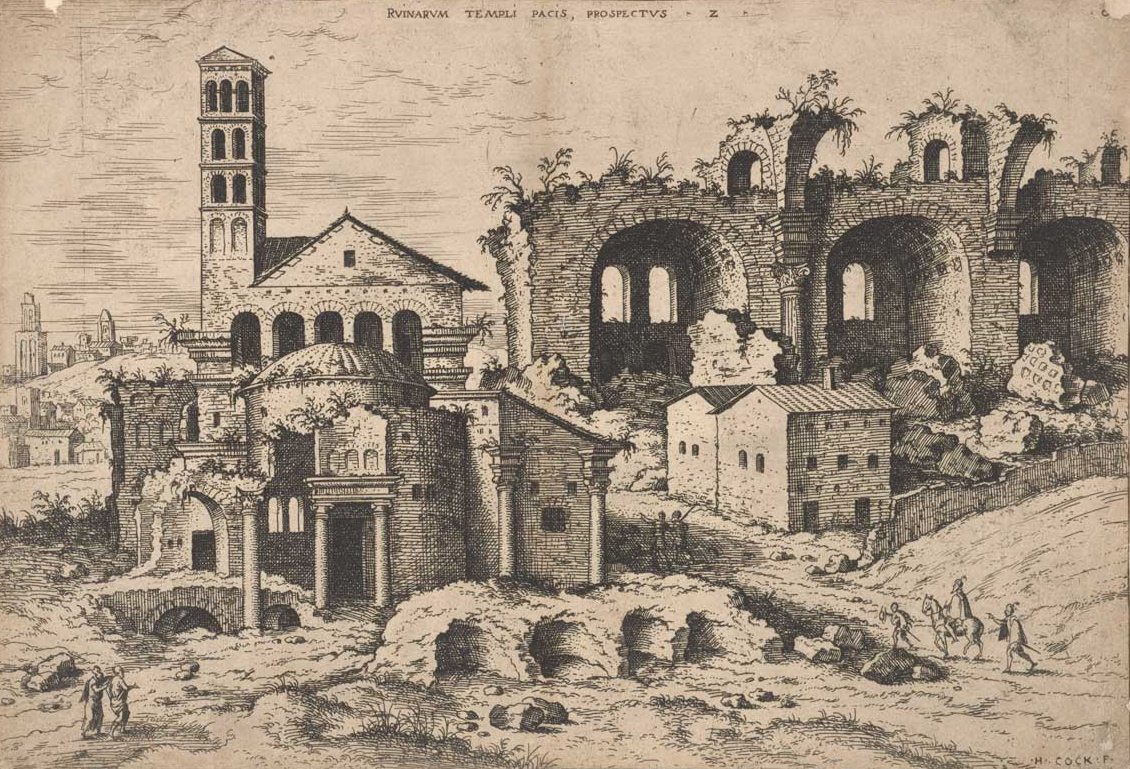
Hieronymus Cock (artist and publisher)
Belgium (Flanders), 1510-70
Volcxken Diericx (publisher)
Belgium (Flanders), c.1525-1600Ruiniarum Templi Pacis prospectus 2. [View of the Temple of Peace 2.], 1550-51
Etching
from Praecipua aliquot Romanae antiquitatis ruinarum monimenta, vivis prospectibus, ad veri imitationem affabre designate. [Several important monuments of Roman antiquity, with vivid perspectives, skilfully designed to imitate the real thing.], also known as Large book of ruinsGift of Dr J. Orde Poynton, 1959
Prints and Drawings Collection, Archives and Special Collections
1959.2969 -
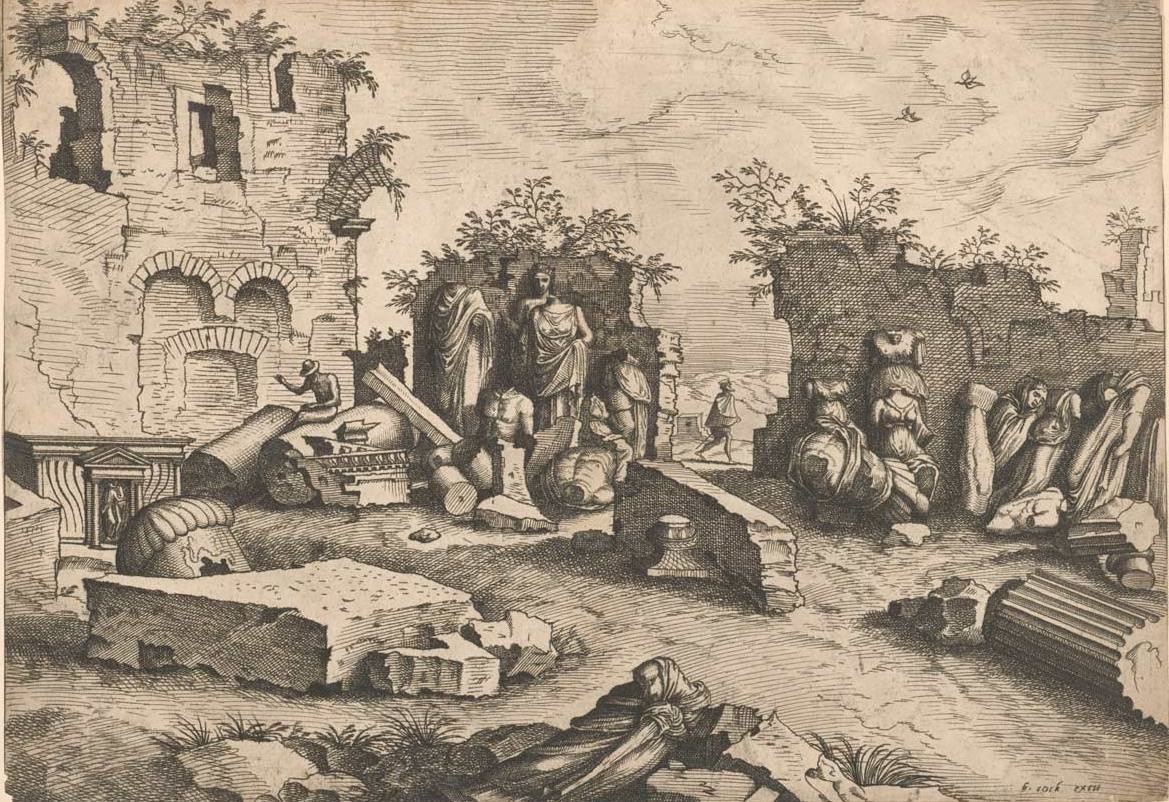
Hieronymus Cock (artist and publisher)
Belgium (Flanders), 1510-70
Volcxken Diericx (publisher)
Belgium (Flanders), c.1525-1600Fragmentorum antiquorum variorum prospectus. [Perspectives of various ancient fragments.], 1550-51
Etching
from Praecipua aliquot Romanae antiquitatis ruinarum monimenta, vivis prospectibus, ad veri imitationem affabre designate. [Several important monuments of Roman antiquity, with vivid perspectives, skilfully designed to imitate the real thing.], also known as Large book of ruinsGift of Dr J. Orde Poynton, 1959
Prints and Drawings Collection, Archives and Special Collections
1959.2972 -
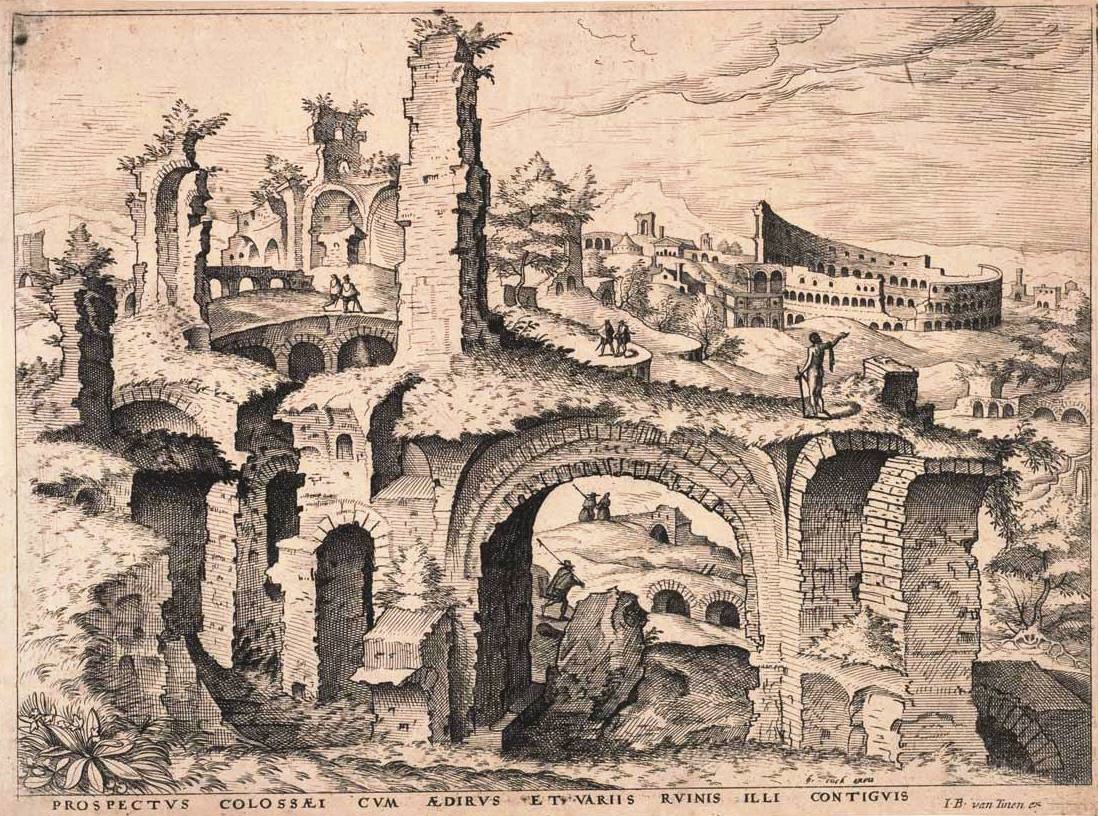
Hieronymus Cock (artist and publisher)
Belgium (Flanders), 1510-70
Volcxken Diericx (publisher)
Belgium (Flanders), c.1525-1600Prospectus Colossaei cum aedibus et Variis ruinis illi contiguis. [View of the Colosseum with nearby buildings and various ruins.], 1550-51
Etching
from Praecipua aliquot Romanae antiquitatis ruinarum monimenta, vivis prospectibus, ad veri imitationem affabre designate. [Several important monuments of Roman antiquity, with vivid perspectives, skilfully designed to imitate the real thing.], also known as Large book of ruinsGift of Dr J. Orde Poynton, 1959
Prints and Drawings Collection, Archives and Special Collections
1959.2976 -
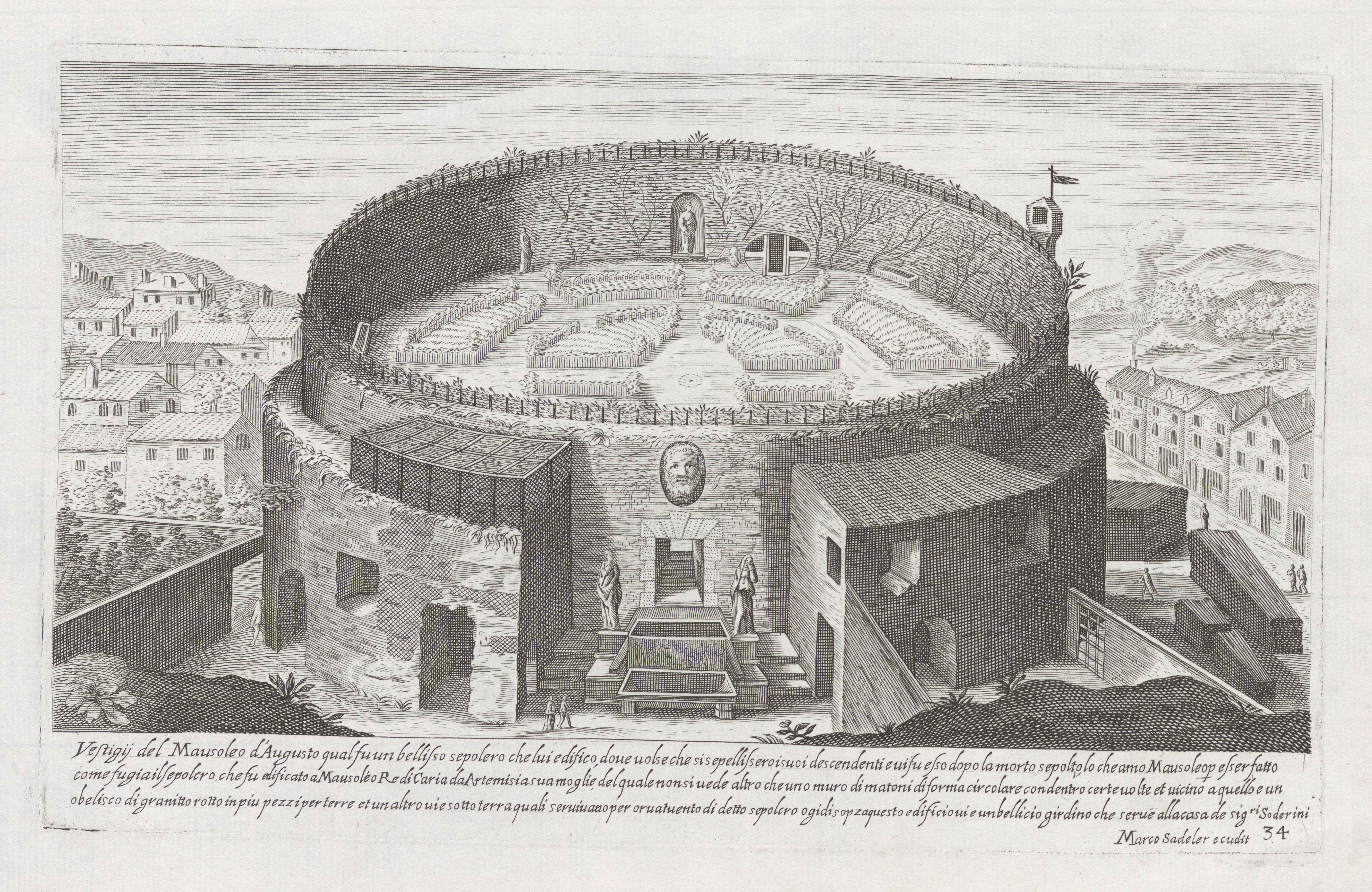
Aegidius Sadeler II (engraver)
Belgium (Flanders), c.1570 1629; active Germany (Munich), Italy (Rome, Verona and Venice) and Czech Republic (Bohemia)
after Étienne Dupérac (artist)
France, c.1535 1604; active Italy (Venice and Rome)
Marco Sadeler (publisher)
Unknown, active Italy (Venice), 1660sVestigij del Mausoleo d’Augusto qual fu un bellifso sepolero che lui edifice. [Remains of the Mausoleum of Augustus, which was a beautiful tomb that he built.],1660
Engraving
from Vestigi delle antichita di Roma, Tivoli, Pozzuoli et altri luochi [Traces of ancient Rome, Tivoli, Pozzuoli and other places]Gift of Terence Lane OAM, 2024
Prints and Drawings Collection, Archives and Special Collections
2024.0048 -
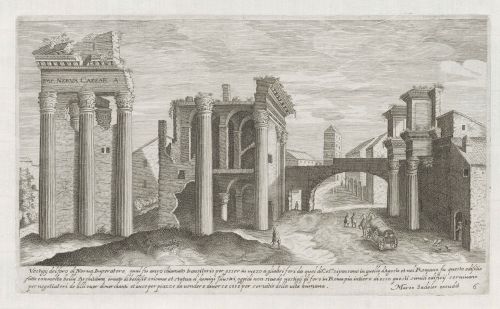
Aegidius Sadeler II (engraver)
Belgium (Flanders), c.1570 1629; active Germany (Munich), Italy (Rome, Verona and Venice) and Czech Republic (Bohemia)
after Étienne Dupérac (artist)
France, c.1535 1604; active Italy (Venice and Rome)
Marco Sadeler (publisher)
Unknown, active Italy (Venice), 1660sVestigij del foro di Nero Imperatore, qual fu anco chianiato transitorio per esser in mezzo a glialtri fori. [Remains of the forum of Nero Emperor, which was also called transitory because it was in the middle of the other forums.], 1660
Engraving
from Vestigi delle antichita di Roma, Tivoli, Pozzuoli et altri luochi [Traces of ancient Rome, Tivoli, Pozzuoli and other places]Gift of Terence Lane OAM, 2024
Prints and Drawings Collection, Archives and Special Collections
2024.0047