When two extraordinary photographic processes were announced in 1839, it is no exaggeration to say they forever altered the trajectory of the Grand Tour. With the promise of a neutral and accurate record, photography aligned itself with the conventions of the Grand Tour. Rooted in the empirical ideals of the Enlightenment – where knowledge is gained through the sensory experiences of travel and direct observation – photography quickly became an integral element of the Tour. It also paved the way for companies like Fratelli Alinari to become global suppliers of art and architectural photographs.
The invention of photography
On January 7, 1839, Louis-Jacques-Mandé Daguerre (1787-1851) introduced the daguerreotype to the French Academy of Science in Paris. His manual described a unique image on a metal plate. The other system made public in 1839 was to the Royal Society in London. This process described an image on paper with a negative-positive process known as the calotype or talbotype. The inventor was William Henry Fox Talbot (1800-77). Both processes shaped the history of photography, and although the technical characteristics of each process were quite different, they both achieved the long-held ambition to capture light reflected in a camera obscura. The influential nineteenth-century critic, artist and proponent of the Grand Tour, John Ruskin (1819-1900) understood photography’s potential earlier than most. Writing to his father from Venice in 1845 he states:
Daguerreotypes taken by this vivid sunlight are glorious things. It is very nearly the same thing as carrying off the palace itself: every chip of stone and stain is there, and of course there is no mistake about proportions. . . It is a noble invention.1
Ruskin made and collected daguerreotypes, acquiring his own camera in 1849. His surviving collection of daguerreotypes (now held in the University of Lancaster) depict views from France, Switzerland and Italy. He used some of these photographs to create illustrations for his book publications including the recording of architectural details in his essay The Seven Lamps of Architecture (1849).2
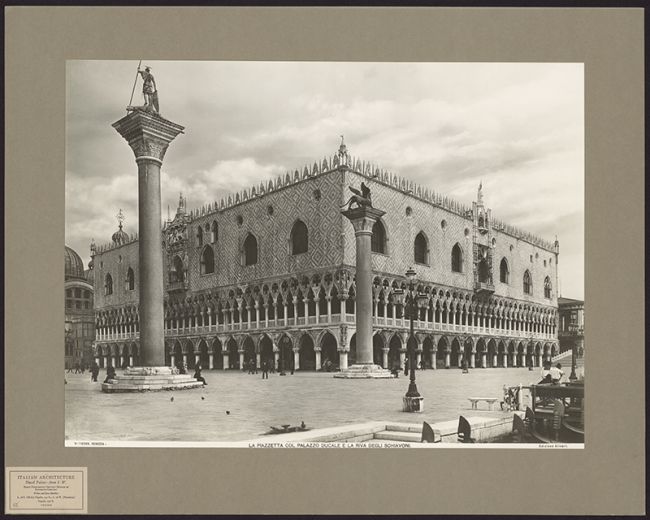
With volatile chemistry and cumbersome equipment, photography was not immediately available to everyone.3 Specialist bookshops and stationers intervened, catering to travellers along popular Grand Tour routes. The stationers offered high-quality photographic souvenirs and by 1850 it was common for travellers visiting notable locations such as Florence, Venice, and Rome to find pre-printed photographically illustrated albums. Bound in elaborate formats, these were luxury items showcasing professionally taken images of landmarks, sculpture, paintings, ruins, and cityscapes. Single, unmounted prints were also available allowing the traveller to curate their own personal collections.
Travellers in the nineteenth century acquired photographs of the destinations they visited to serve as personal mementos and as a symbol of prestige. Besides their souvenir status, these photographic collections also maintained the traditional objective of the Grand Tour – a connection between travel and geographical knowledge. As it has been noted: ‘The ritual of purchasing photographic spolia became an integral part of the work of tourism.’4
Photography also did something else – its veracity was so effective that armchair travellers were able to experience the attractions of the Grand Tour without having to leave home. The nineteenth-century obsession with stereoscopic views (where the photographic image presents itself in three dimensions) had a role in this phenomenon. Audiences were familiar with topographical accuracy, evident in popular eighteenth-century veduta painting, but photography offered a ‘virtual reality’ previously unknown. As Gustave Flaubert conveyed when describing Maxime Du Camp’s photography: ‘Nothing could have conveyed their great emotion upon seeing the Sphinx like Du Camp’s photographs.’5
The invention of photography also coincided with travel becoming easier – the end of the Napoleonic Wars allowed travellers to return to the continent while the spread of the newly invented railways and steamships made travel faster and simpler. This accessibility gave rise to the growth in tourism particularly amongst wealthy industrialists. With the advent of the Industrial Revolution, the Grand Tour, formerly a rite of passage for gentlemen of the aristocratic and noble classes, shifted to include a broader demographic of wealth and gender.
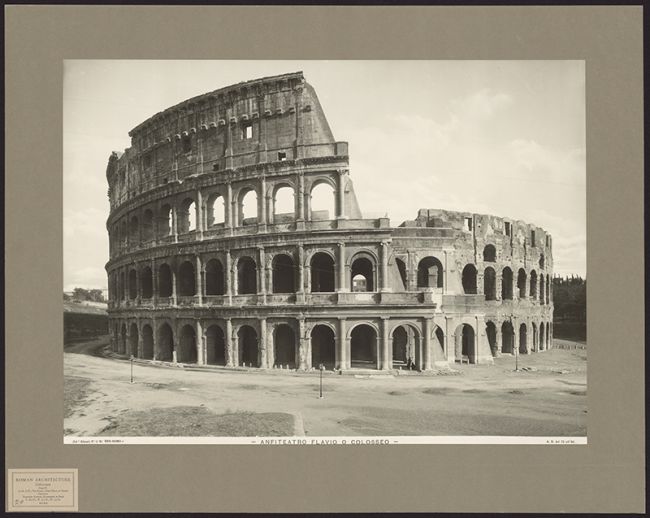
The popularity of photographic souvenirs and the rise in tourism coincided with the commercial development of photography. Photography was evolving technologically, with its chemistry and optics becoming faster, sharper and more reliable. By 1855 daguerreotypes and Talbot’s calotypes were largely replaced by Frederick Scott Archer's (1813-57) wet plate collodion negative process. These negatives, typically produced on glass, combined superbly with the albumen-silver print process devised by Louis Désiré Blanquart-Evrard (1802-72) in the 1850s.6 This combination of negative and print offered sharp detail and striking realism, and also allowed for the creation of an unlimited number of copies from a single negative – making photography commercially viable for photographers and vendors. Photographic studios increased rapidly, occupying the most important locations along the Grand Tour routes. As the historian of photography, Italo Zannier, points out:
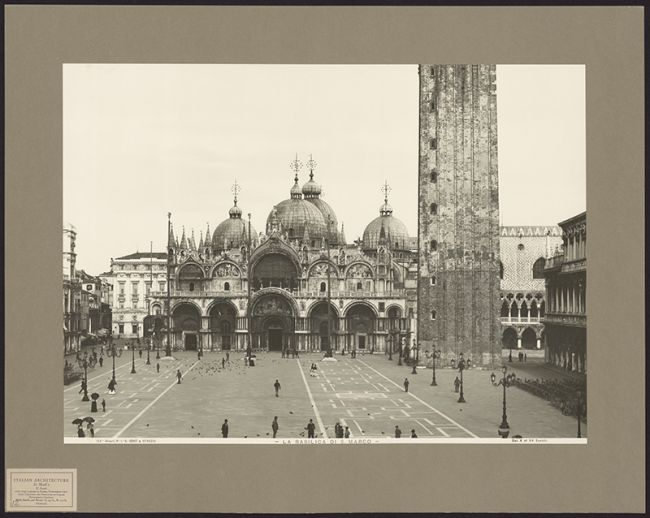
By the 1860s there were more than twenty-five photographer’s display windows in Venice’s St Mark’s Square alone.7
Fratelli Alinari's art and architectural photographs
One of the best known and highly regarded photographic firms working out of Italy was Fratelli Alinari. Alinari dominated the tourist market and went on to develop a significant reputation in art reproductions. The first Alinari photographs appeared around 1850 under the direction of Giuseppe Bardi (born c.1790), the eminent Florentine engraver. Bardi encouraged his employee Leopoldo Alinari to investigate photography and to sell photographs to tourists. By 1854 Leopoldo (1832-65) and his younger brothers Giuseppe (1836-90) and Romualdo (1830-90) founded Fratelli Alinari Fotografi Editori. 8 Printed in French, their first catalogue, Collection des Vues Monumentales de la Toscane en Photographie par les Frères Alinari, Florence, Louis Bardi, Avril (1856) consisted of architectural views and photographs of sculpture from Tuscany including Florence, Pisa, Siena and Arezzo. Some of these views received a medal of excellence when they were exhibited at the Exposition Universelle, Paris, in 1855. The brothers had aspirations to document all the landmarks of Italy, but by 1858 they decided to specialise in reproductions of works of art, and earned recognition among critics, art collectors and historians including John Ruskin.9 Using collodion negatives they concentrated on documenting drawings from the Uffizi; this was followed by a commission from Queen Victoria and Prince Albert to document all drawings by and after Raphael. In the latter half of the nineteenth century, they turned their attention to capturing Italian landscapes and cityscapes. By 1881, Fratelli Alinari adopted the faster and more convenient gelatin silver dry plate negatives on glass. With the death of Leopoldo, his son Vittorio Alinari (1859-1932) carried on the work of photographic firm. Vittorio was known for his use of the technically challenging but very effecting large glass-plate negatives measuring 210mm x 270mm.10 The firm also acquired the negatives of other well-known Grand Tour photographers including the Alessandri Brothers (1818-93); Giacomo Brogi (1822-81), who like Leopoldo moved from engraving to photography; and James Anderson (1813-77), acclaimed for his photographs of Rome.11
Today the Alinari archive is managed by the regional government of Tuscany and is the world’s oldest photographic agency.12 Under the direction of Claudio de Polo, Alinari President (1984-2019) the collection was conserved and expanded upon.13 Today the archive holds some of the earliest daguerreotypes and calotypes, photographic equipment, historical atelier tools and technical instruments.14 As Zannier observed: ‘The Alinari collection documents the evolution of the Grand Tour.’15
Alinari's Grand Tour photographs in the Carnegie Art Reference Set for Colleges
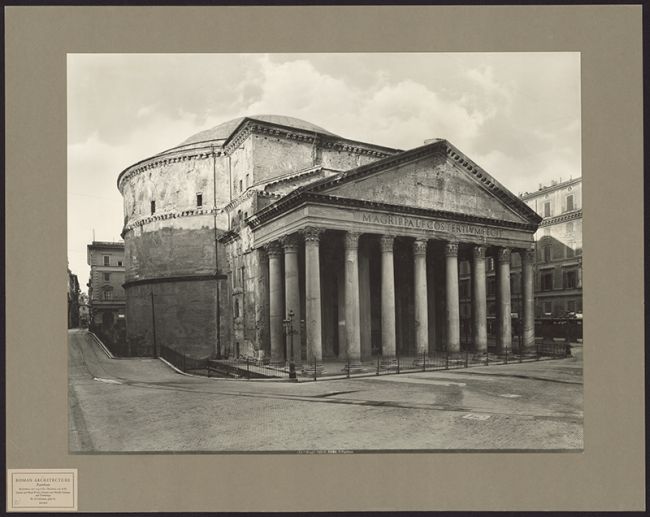
With a collection of over five million items, Alinari has provided images to countless scholars, art collectors, universities, and museums including the Carnegie Corporation of New York. Printed in the 1920s, the photographic views displayed in this exhibition are typical of those acquired by protagonists of the Grand Tour, and many are derived from Alinari’s original nineteenth-century negatives.
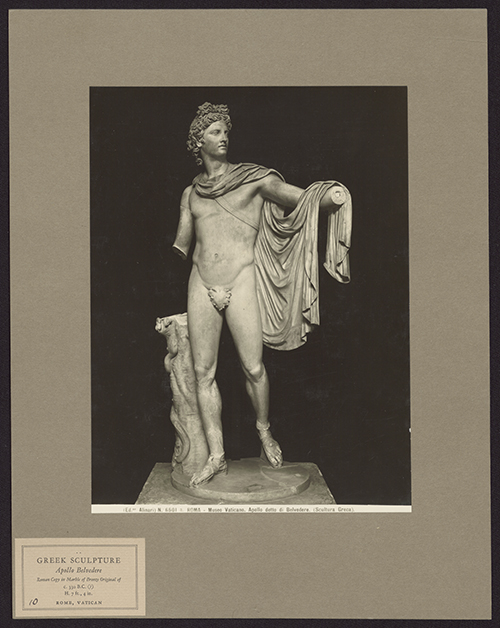
Between 1927 and 1941 the Carnegie Corporation of New York distributed 69 art reference sets, gifting one to the University of Melbourne in 1938. The Carnegie Art Reference Set for Colleges provided a photographic history of art with high-quality photographs, coloured prints and facsimiles. Records indicate the Melbourne copy is the only complete set in Australia. The gift was reported in several local newspapers. The Age, 29 April 1938, described how the Warden of the Student Union, Dr W. Bryden, had seen a similar collection when he was in America and believed it would be a great asset to the University. The collection was placed in the Rowden White Library in Union House, and several hundred prints were displayed in the Ewing Art Gallery.16
The influence of the reference set on art education and artists in Australia is notable. In 1938, Australian artist, lecturer, gallerist and broadcaster Stephanie Taylor (1899–1974), proposed that the donated prints equipped the university to offer degree courses in art history and appreciation, and that it should establish a ‘Chair of Art’.17 The lack of art education in Australia had been a long-standing lament of National Gallery of Victoria Director Daryl Lindsay (1889–1976).18 Taylor and Lindsay’s lobbying was rewarded with the establishment of the Herald Chair of Fine Arts in 1947. From 1947 the department started to build its own collection of art reproductions – sourcing lantern slides and printed images from the Courtauld Institute of Art in London and commissioning local photographers, including Wolfgang Sievers (1913-2007), Mark Strizic (1928-2012) and Axel Poingant (1906-86) to produce teaching resources of Australian art and architecture. Nonetheless, the Carnegie photographs were still in demand throughout the 1950s, as made clear by June Stewart, the Department of Fine Arts’ inaugural curator who writes:
The set of mounted photographs (mainly Alinari prints, some in colour) given to the University by the Carnegie Corporation together with books on art was frequently used by the department in the 1950s when housed in the Rowden White Library. Since the rebuilding of the Union [c. 1964-1968] this material has been in store. 1920
The Carnegie Art Reference Set for Colleges remained with the student Union’s Rowden White Library until it was transferred to the Architecture Library (Melbourne School of Design). The collection was re-housed again in 2012, this time with the Art History Library, known today as the Visual Cultures Resource Centre, in the Faculty of Arts. The prints are arranged in chronological order and stored in their original custom-made solander boxes. The collection consists of 1,500 prints across forty-four boxes and are presented in three uniform sizes: 28 x 35.5cm; 35.5 x 45.7cm and 55.8 x 71cm. The photographs are dry mounted on grey board and according to the Carnegie Corporation this system was developed after much experimentation and guaranteed the preservation of the photographs.21
The exacting task of choosing the best photographic reproductions fell to Professor John Shapley, art scholar and president of the College Art Association (1929-38) with the assistance of Mr. Henry Kent and Miss Alice L. Felton, both of the Metropolitan Museum of Art. The New York publisher, Mr. Rudolf Lesch was commissioned to purchase the finest reproductions available in the principal art centres of the United States and Europe.
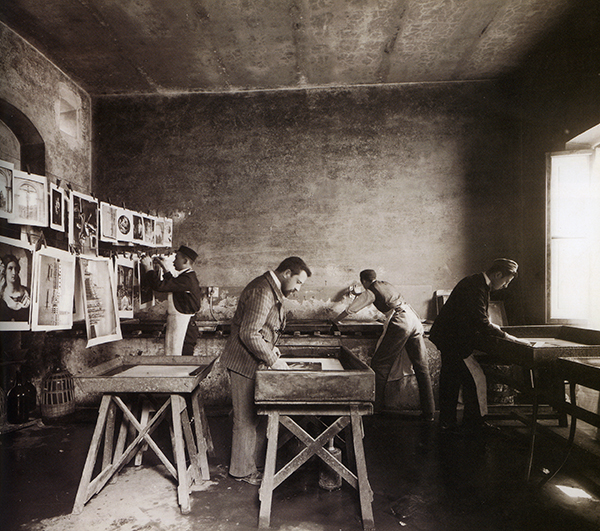
Unsurprisingly, most of the photographs Lesch selected for the Carnegie Art Reference Set for Colleges were made from nineteenth- and early twentieth-century negatives produced by Fratelli Alinari. A distinctive feature of an Alinari photograph is preserved at the base of the photographic frame – making identification relatively straightforward. Like the modern-day equivalent of meta-data on a digital file, the photograph includes information such as the Alinari name, a unique edition number, the location, subject and date. This was a well organised photographic company with a system that could trace its reproductions back to the original negative. As Claudi de Polo asserts: ‘One cannot speak about photography and the history of photography without recalling the Alinari brothers and their method of operation.’22
The Grand Tour was widely regarded as a primary means of observing and understanding the world, therefore photography emerged as a novel method for acquiring, organizing, and disseminating geographical knowledge. No other photographic firm took to this challenge so comprehensively as Fratelli Alinari and the ensuing Alinari dynasty.In the 1904 Guide to Florence, Vitorio Alinari wrote:
I feel I've done something useful for both artists and art lovers by offering in this Guide, along with the description of the monuments and works of art that beautify our city, the means for knowing whether they have been reproduced photographically (that is, a catalogue with the available images) and consequently whether or not it is easy to obtain a souvenir of them …23
The striking Alinari photographs from the Carnegie Art Reference Set for Colleges arrived in Melbourne at a time when European travel was out-of-reach for most Australian students. From the 1930s through to the 1950s they were handed around in seminars, exhibited and made into glass lantern slides for lectures – providing a Grand Tour of sorts for Australian students. These black-and-white photographs performed as surrogates for otherwise inaccessible European art and architecture, empowering students with expertise in visual analysis and comparative evaluation. The enduring interest in these photographs, along with their lasting impact and global reach, remains evident today—serving artists and art enthusiasts, just as Vittorio Alinari had envisioned, and ultimately fulfilling some of ideals of the Grand Tour itself.
Endnotes
[1] Michael Harvey, “Ruskin and Photography” in Oxford Art Journal, 1984, Vol. 7, No. 2, Photography (1984), pp. 25-33 https://www.jstor.org/stable/1360290 (accessed 4 June 2025)
[2] John Ruskin, The Seven Lamps of Architecture (London: Smith, Elder & Co, 1849)
[3] Chemistry used in nineteenth-century photographic processes included mercury and silver nitrate. These sometimes-volatile chemicals were carried by the travelling photographer. Furthermore, photographic plates had to be sensitized and developed in situ using portable darkrooms or light proof tents. Heavy timber tripods would hold the wooden cameras and brass lens in place and the exposure times were lengthy.
[4] Graham Smith, “Photography and Sculpture” in Encyclopedia of Nineteenth-century Photography / John Hannavy, ed. (New York: Routledge, 2008), p.1111
[5] Zannier, Italo. Le Grand Tour: In the Photographs of Travelers of 19th Century = Dans Les Photographies Des Voyageurs Du XIXe Siècle = Nelle Fotografie Dei Viaggiatori Del XIX Secolo / Italo Zannier; Introd. Cesare De Seta. (Venezia: Canal & stamperia, 1997)
[6] As the predominant print method in the 1850s-1890s, the albumen print process introduced the rise of the great industrial photographic houses. Egg whites were a primary step in the Albumen process; therefore, the earliest albumen-printing operations often had many chickens on site. Albumen photographs were precise, detailed, cheap and widely distributed. The albumen print brought photography into the beginnings of mass production and consumption. (from George Eastman House Museum, 2012)
[7] Zannier, Le Grand Tour: In the Photographs of Travelers of 19th Century, pp.102
[8] A history of photography: from analog to digital, from science to art and hobby. (Florence: Alinari, 2005) p.86
[9] Fratelli Alinari Istituto Di Edizioni Artistiche, Exhibition catalogue, (Florence: Alinari, 1980). [Other historians and critics that praised the work of Alinari included Jacob Burckhardt (1818-97) and Diego Martelli (1839-96)]
[10] The size of Vittorio Alinari’s negatives corresponds to the plate size used to reproduce many of the Carnegie Art Reference Set photographs.
[11] A history of photography: from analog to digital, from science to art and hobby. (Florence: Alinari, 2005) p.86
[12] Hannah McGivern, “Vast Fratelli Alinari photographic archive saved by Tuscan government” in The Art Newspaper. London. January 29 (2020)
[13] Including the entire Villani archives, a firm operating out of Bologna, Italy from 1920-80.
[14] Alinari Foundation for Photography: https://www.alinari.it/cms/en/patrimonio/archivi-alinari (accessed June 5, 2025)
[15] Zannier, Le Grand Tour: In the Photographs of Travelers of 19th Century, pp.102
[16] "GIFT TO UNIVERSITY." The Age (Melbourne, Vic.:1854 - 1954) 29 April 1938: http://nla.gov.au/nla.news-article205922302 (accessed June 5, 2025)
[17] Stephanie Taylor. “Chair of Art”, letter to the editor, The Argus, 4 May (1938) p. 10
[18] Benjamin Thomas, ‘Caught on Film: The story of Melbourne’s original visual archive’, emaj, issue 3 2008 https://arts.unimelb.edu.au/__data/assets/pdf_file/0006/1736277/thomascaught-on-film.pdf
[19] Melbourne, University of Melbourne Archives: Department of Fine Arts Papers, (1947-1982),1983.0004, Unit 8.
[20] “Union House” from Constructing Change: The evolving Parkville Campus. https://omeka.cloud.unimelb.edu.au/constructing-change/exhibits/show/architecturalstyles/item/15 (accessed 6 June 2025)
[21] Carnegie Art Reference Set for Colleges (New York: Rudolf Lesch Fine Arts, 1939), introductory pages from the catalogue
[22] Claudio de Polo, “Alinari: Photographic Dynasty from the Origins of the Photographic Atelier to the Industrial Era (1852-1890)” in Visual Resources, Vol IX (1994) pp.349-360
[23] Polo, Visual Resources, pp 349