Francesca da Rimini
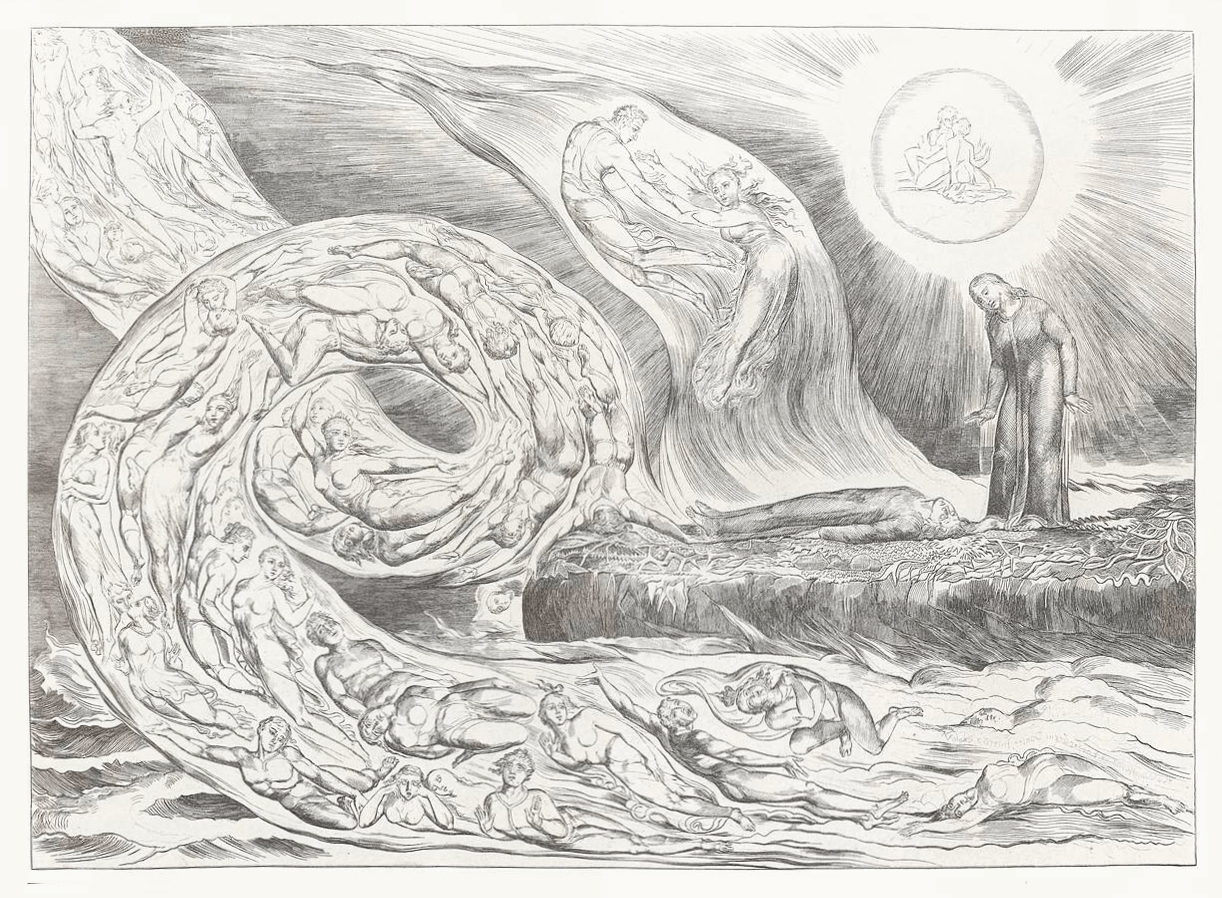
The appearance of Francesca da Rimini in Canto V (73-142) takes place in the Second Circle of Hell, occupied by the Lustful whose punishment is to be tossed unceasingly by whirling winds. Dante asks to speak to: “those two / that seem to ride as light as any foam, / and hand in hand on the dark wind drifting go” (73-5). Francesca speaks of how she and “this lad with the lovely body” were killed by a kinsman and, famously, how “the bitterest woe of woes / Is to remember in our wretchedness / Old happy times” (121-3). Dante recognises and names her, but does not name Paolo, her lover, who wails throughout. Francesca recounts their reading together of the Arthurian legend of Lancelot’s love for Queen Guinevere and how, stirred by the passion of the story, they “read no more that day” (139). Dante is so distressed by Francesca’s account that he faints.
Unusually in the Divine Comedy, here Dante himself is the historian: the first to document the story. Although what he writes is allusive—and we must wait until the Canto VI to learn that Francesca is related to her lover by marriage—it is possible to infer her family name from her birthplace, and that their murderer was a brother. Dante does not tell us how they were killed.
Rather than just a story of adultery and murder, it is also a political tale. Francesca is unfaithful within a politically motivated marriage. The story is also gendered in the importance, and agency, Dante allots to Francesca as a 'dynastic wife'.
There is much here for visual artists to represent: the dark, whirling winds that torment many souls, not just Francesca and Paolo; their shared reading of a book; and Dante’s swoon. Unusually William Blake combines them all in a single image.

Italian opera was mainstream entertainment in 19th century Italy, and most urban centres had an opera house; repeat attendance was usual. From the 1820s to 70s, operatic settings of the Francesca da Rimini story were popular, particularly in Italy, with single libretti set multiple times.
Massimiliano Quilici’s opera seria, Francesca da Rimini, was first performed in Lucca in 1829. The booklet pictured, however, celebrates the 1831 Spring season of the work at the historic Teatro della Pergola in Florence (est. 1656). The booklet supplies the libretto, by Felice Romani, the leading librettist of his day, and full performer details. The Francesca da Rimini libretto includes many of the accretions - and historical inaccuracies - of subsequent commentators, and is said to be based on Silvio Pellico’s 1818 spoken-word play of the same name, greatly abbreviated to two acts.
In this version, set in Rimini, Francesca has fallen in love with Paolo Malatesta before the opera begins. The forced marriage of Francesca to Lanciotto Malatesta, bringing peace to Ravenna and Rimini, has taken place and Francesca’s father, Guido da Polenta, is in residence. Paolo arrives and, in a scene in his brother’s palace, alone with Francesca, their passions re-ignite as they take turns reading of Lancelot and Guinevere. They are caught but escape death through Guido’s intervention. Francesca vows to take the veil but Paolo seeks her out and they meet in the convent cloister. The lovers are discovered again; Lanciotto stabs his wife then Paolo kills himself.